
Objective Data for Personal Injury: 7 Proven JTECH Wins
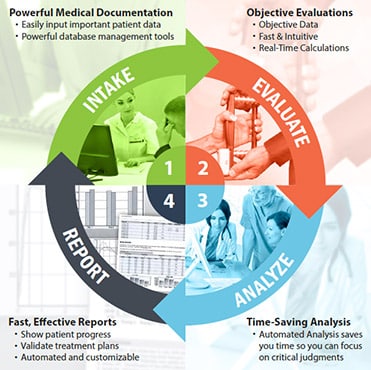
Objective data for personal injury cases is no longer optional. In medical-legal and workers’ compensation settings, providers must defend every clinical decision, treatment plan, and bill with measurable evidence. JTECH Medical objective testing systems deliver the reliable, reproducible data that attorneys, insurers, and case managers expect. This post explains why objective data for personal injury matters, how Dr. Bagherian uses JTECH technology, and what published evidence supports the approach.
Why Objective Data for Personal Injury Matters
Personal injury and workers’ compensation claims are adversarial by nature. Subjective reports alone rarely hold up under scrutiny. Attorneys, insurers, and case managers expect objective, repeatable measurements that demonstrate impairment and progress. The AMA Guides to the Evaluation of Permanent Impairment explicitly emphasize impairment ratings based on objective assessment (Rondinelli et al., PMC4642479).
With objective data for personal injury workflows in place, JTECH Medical helps healthcare providers:
- Consistently capture reliable, reproducible objective data at intake and re-evaluation
- Generate defensible documentation that aligns with industry standards
- Optimize case outcomes for personal injury and workers’ compensation patients
- Reduce documentation time with automated, audit-ready reports
- Support medical necessity with numeric baseline-to-reassessment deltas
How Dr. Bagherian Uses JTECH for Objective Data in Personal Injury Cases
Dr. Bagherian integrates JTECH’s functional testing technology into his daily workflow to objectively measure human performance across a wide range of patients. His practice is a strong example of what consistent objective data for personal injury looks like in the real world.
- Building a practice on science. Grounding clinical decisions in validated measurements prioritizes evidence over opinion.
- Providing evidence for reimbursement. Data supports clean, defensible documentation that helps justify medical necessity and streamline reimbursement.
- Integrating into medical-legal cases. Repeatable measurements give attorneys and insurers the impairment ratings and functional capacity evaluations they require, protecting both patient and provider.
Read the full Dr. Bagherian personal injury and workers’ comp case study for the complete workflow.
What the Evidence Says
Peer-reviewed research backs the value of objective data for personal injury and workers’ compensation cases. Functional Capacity Evaluation (FCE) protocols show good-to-excellent inter-rater reliability for material handling tests, with ICCs as high as 0.96 (Trippolini et al., 2013). Short-form FCE has been validated for predicting return-to-work outcomes in patients with low back disorders (PMID 16705496).
The AMA Guides 6th Edition further reinforces that impairment ratings should rest on documented, objective findings, not provider opinion (AMA Guides Syllabus). Clinics using JTECH objective testing align with these standards by default.
7 Proven Wins from Objective Data in Personal Injury Cases
- Stronger medical necessity support for every claim
- Faster, cleaner reimbursement workflows
- Reduced documentation time with automated reports
- Improved inter-rater reliability across providers
- Defensible impairment ratings consistent with the AMA Guides
- Repeatable FCE results that hold up in medical-legal cases
- Better patient outcomes through evidence-based decisions
Bring Objective Data Into Your Practice
If your clinic handles personal injury or workers’ compensation cases, switching to objective data for personal injury workflows is one of the highest-leverage moves you can make. JTECH Medical’s Northstar platform replaces the end-of-life Tracker system and delivers automated, audit-ready reports for every visit.
Talk to a JTECH specialist to see how Northstar, FCE, and computerized ROM and strength testing can transform your case documentation. Browse more JTECH case studies for additional examples of objective data for personal injury success.
References
- Trippolini MA, et al. Reliability and Safety of FCE. J Occup Rehabil. 2013. PMC3734606
- Gross DP, et al. Short-form FCE for low back disorders. 2006. PMID 16705496
- Rondinelli RD, et al. Impairment rating and the AMA Guides. PMC4642479
- AMA Guides to the Evaluation of Permanent Impairment, 6th Edition. Syllabus PDF
Frequently Asked Questions About Objective Data for Personal Injury
What counts as objective data for personal injury cases?
Objective data for personal injury includes computerized range of motion, muscle strength testing, grip and pinch dynamometry, and Functional Capacity Evaluation results. These measurements are reproducible, instrument-based, and independent of patient self-report, which is exactly what insurers and adjudicators expect.
Why is objective data better than provider notes alone?
Provider notes describe; objective data documents. Numeric baseline-to-reassessment deltas demonstrate progress, support medical necessity, and reduce the risk of denied claims in personal injury and workers’ compensation cases.