
Grip Strength Testing Protocols & Return-to-play in Sports Medicine
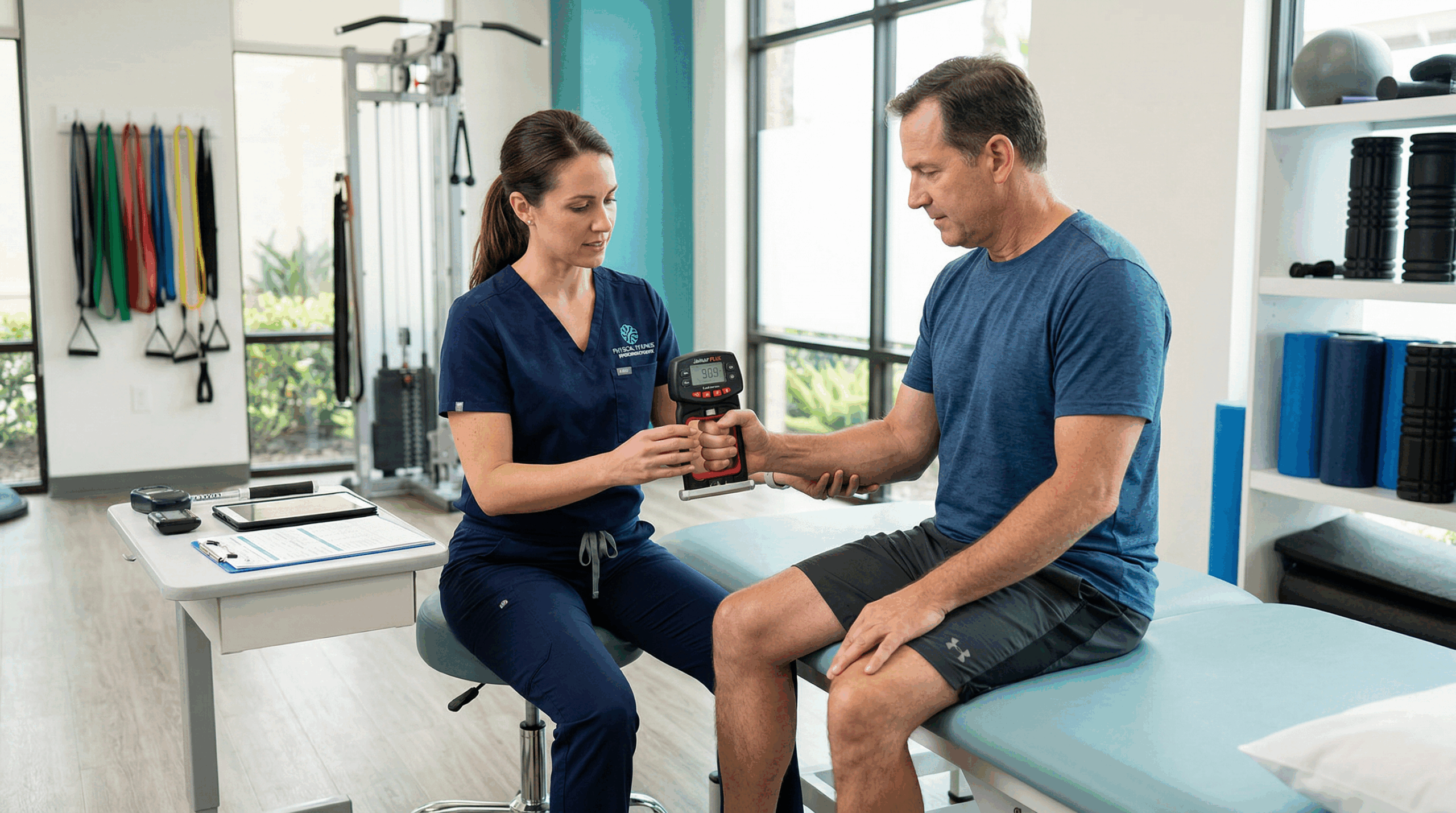

Grip strength testing protocols turn return-to-play from guesswork into evidence. Modern grip strength testing protocols use calibrated digital dynamometers to measure neuromuscular readiness, fatigue, and side-to-side asymmetry in under a minute. Paired with Commander Echo, these grip strength testing protocols give sports medicine clinicians defensible, repeatable data for every athlete. Explore JTech Medical solutions built around evidence-based grip strength testing protocols that align with National Athletic Trainers’ Association and American College of Sports Medicine best practices.
Grip strength testing is a quick, objective sports medicine assessment that uses a hand dynamometer to measure neuromuscular readiness, fatigue, and side‑to‑side asymmetries in athletes.
Why Grip Strength Deserves a Spot in Every Sports Medicine Protocol
In sports medicine, few tests are as fast, portable, and informative as grip strength testing. A single handheld dynamometer measurement takes under a minute, yet it can reveal neuromuscular fatigue, track recovery from injury, and signal when an athlete is truly ready to return to play.
For years, grip strength was treated as a hand-specific metric. Today, sports medicine providers are using it as a whole-body indicator of central nervous system load, recovery status, and injury risk. The shift is backed by a growing body of research and a simple practical reality: athletes need objective, repeatable data to make smart decisions about training and return to competition.
Grip Strength as a Marker of Athlete Readiness
Grip strength reflects more than just forearm power. Because the central nervous system drives every maximal muscle contraction, a drop in grip output can indicate CNS fatigue, under-recovery, or accumulating training load. That makes it a practical daily readiness check.
A common protocol is to establish an athlete’s baseline during preseason, then perform one or two quick morning trials on training days. If grip strength drops more than 5 to 10 percent from baseline, clinicians and coaches know to adjust training volume or prioritize recovery. A persistent drop that lasts more than 24 hours after competition often signals incomplete recovery and a higher injury risk.
This kind of monitoring is most useful when the data is consistent. Same time of day, same warm-up, same grip position, same calibrated device. Without standardization, day-to-day variation can mask real changes in readiness.
Grip Strength for Injury Prevention and Early Risk Detection in Athletes
Left-right grip asymmetry is one of the simplest red flags in sports medicine. A difference greater than 10 percent between dominant and non-dominant hands can point to compensatory patterns, undetected overuse injury, or neurological factors that predispose an athlete to further harm.
Research on overhead and racquet athletes has shown that elbow tendinopathies like lateral and medial epicondylitis are associated with grip strength reductions of 6 to 15 percent on the affected side, along with meaningful drops in wrist flexion torque. These deficits often appear before the athlete reports significant pain, making routine grip testing a valuable screening tool.
Because the test is so quick, it can be built into weekly medical check-ins without slowing down training. Over time, the longitudinal data becomes more valuable than any single reading.
Using Grip Strength to Track Recovery and Return‑to‑Play
After a hand, wrist, elbow, or shoulder injury, grip strength becomes a direct measure of recovery. The standard benchmark for return to sport is grip strength within 90 to 100 percent of the uninjured side, documented across repeated trials.
For post-surgical patients, a typical cadence is to re-test every two to four weeks through rehabilitation. The trend line matters more than any single number. Steady week-over-week gains confirm the treatment plan is working. A plateau or decline is a signal to adjust the rehabilitation program before the athlete is cleared.
Grip strength also has an emerging role in concussion recovery. Youth athletes with concussion have shown significant grip strength reductions during the symptomatic phase, with below-baseline values persisting even after symptoms resolve. When used alongside validated cognitive and balance tools, grip measurement adds an objective neuromuscular data point to return-to-play decisions.
Grip Strength Rate of Force Development in Sports Performance
Modern digital dynamometers capture more than peak strength. They record the entire force-time curve, which opens the door to metrics that traditional analog devices cannot measure.
Rate of force development, or how quickly an athlete can ramp up from rest to maximal grip output, is one of the most relevant markers for sport performance. Explosive muscle contractions drive hitting, throwing, striking, and grappling. Research has shown that rate of force development declines faster than peak strength with both aging and fatigue, which makes it a more sensitive indicator of neuromuscular status.
Other curve-based metrics such as grip fatigue, fatigue resistance, and submaximal control give clinicians additional windows into CNS function. For athletes returning from injury, these measures can flag remaining deficits that a simple peak-force number would miss.
Why Calibrated, Objective Tools Matter
Grip strength is only as useful as the data behind it. Manual hand dynamometers with analog dials can produce readings that drift over time and vary between examiners. Without calibration and standardized protocols, comparisons across weeks or providers become unreliable.
Calibrated digital dynamometers solve this in three ways. They capture precise numerical values rather than rounded estimates, they store each measurement automatically with a timestamp, and they allow multiple trials to be averaged to reduce noise. When the device connects to a broader functional testing platform, grip data can sit alongside range of motion, strength, and endurance metrics in a single record.
For a sports medicine team managing dozens of athletes, this integration is what turns individual test scores into actionable insight.
Building Grip Testing Into Your Workflow
Clinics that use grip strength effectively share a few habits:
- Preseason baselines for every athlete, using three maximum trials per hand with 30 to 60 seconds of rest
- Standardized test conditions — same time of day, same position, same device, same warm-up
- Side-to-side comparisons flagged when asymmetry exceeds 10 percent
- Clear return-to-play thresholds typically at 90 to 95 percent of baseline and under 10 percent asymmetry
- Longitudinal trend tracking rather than isolated readings, so subtle changes in readiness are visible
- Integration with other measures like range of motion, hop tests, and sport-specific benchmarks
None of these practices require extensive equipment. What they do require is a commitment to objective measurement and consistent documentation.
The Bottom Line for Sports Medicine Clinicians
Grip strength testing is one of the highest-value, lowest-cost assessments available in sports medicine today. Used consistently, it helps clinicians spot early injury risk, guide return-to-play decisions, and monitor recovery in a way that subjective reports simply cannot match.
The key is standardization. A calibrated digital dynamometer, a repeatable protocol, and integration with the athlete’s broader functional testing record transform a simple squeeze into defensible, actionable data. For sports medicine teams focused on keeping athletes healthy and performing, that objective foundation is what turns grip strength from an underused test into a cornerstone of athlete care.
Standardize Grip Strength Testing Protocols Across Your Practice
Adopting consistent grip strength testing protocols across every clinician, every athlete, and every visit is what turns isolated measurements into actionable trends. With Commander Echo, your grip strength testing protocols capture calibrated, repeatable data that supports safer return-to-play decisions, defensible documentation, and stronger outcomes for athletes at every level.