
Accurate Impairment Ratings: Why Precise Measurement Matters in Occupational Medicine
Why Impairment Ratings Matter
In occupational medicine, few tasks carry more weight than determining a patient’s permanent impairment after a work-related injury. The impairment rating a physician assigns directly influences workers’ compensation benefits, settlement values, return-to-work decisions, and legal outcomes.
For more than 40 states that rely on the AMA Guides to the Evaluation of Permanent Impairment, these ratings are the standard input into complex disability and compensation calculations. But the quality of that input depends entirely on the quality of the measurements behind it. An impairment rating is only as defensible as the data that supports it — and that data has to hold up under scrutiny from insurers, attorneys, and administrative judges.
The AMA Guides and the Role of Objective Data
The AMA Guides to the Evaluation of Permanent Impairment, now in their sixth edition, provide the framework physicians use to translate clinical findings into standardized impairment percentages. The goal is consistency: two physicians evaluating the same patient under the same conditions should arrive at the same rating.
To reach that consistency, the Guides rely heavily on objective measurements — range of motion, strength, sensory findings, and functional capacity. Subjective reports of pain or limitation alone are not sufficient. The physician must document specific, quantifiable values and compare them against normative data to assign an impairment class and percentage.
This puts enormous pressure on the measurement process itself. If the data is imprecise, inconsistent, or poorly documented, the rating can be challenged — and often is.
Why Measurement Precision Is So Often the Weak Link
In many clinics, range of motion is still measured with a handheld goniometer, and strength is estimated on a manual muscle testing scale. These methods depend heavily on the clinician’s technique, experience, and even visual judgment. Two providers measuring the same patient can easily produce readings that differ by 10 to 15 degrees or a full grade of strength.
Research has shown that manual goniometry can have inter-rater reliability variations wide enough to shift a patient’s impairment rating by several percentage points. On a spinal impairment calculation, that can translate to tens of thousands of dollars in disputed compensation.
When a rating ends up in a deposition or hearing, the opposing expert will often focus on exactly this weakness: “How do we know the measurements are accurate? Were the instruments calibrated? Was the protocol standardized?” If the answer is not clear, the rating loses credibility.
How Objective Tools Change the Outcome
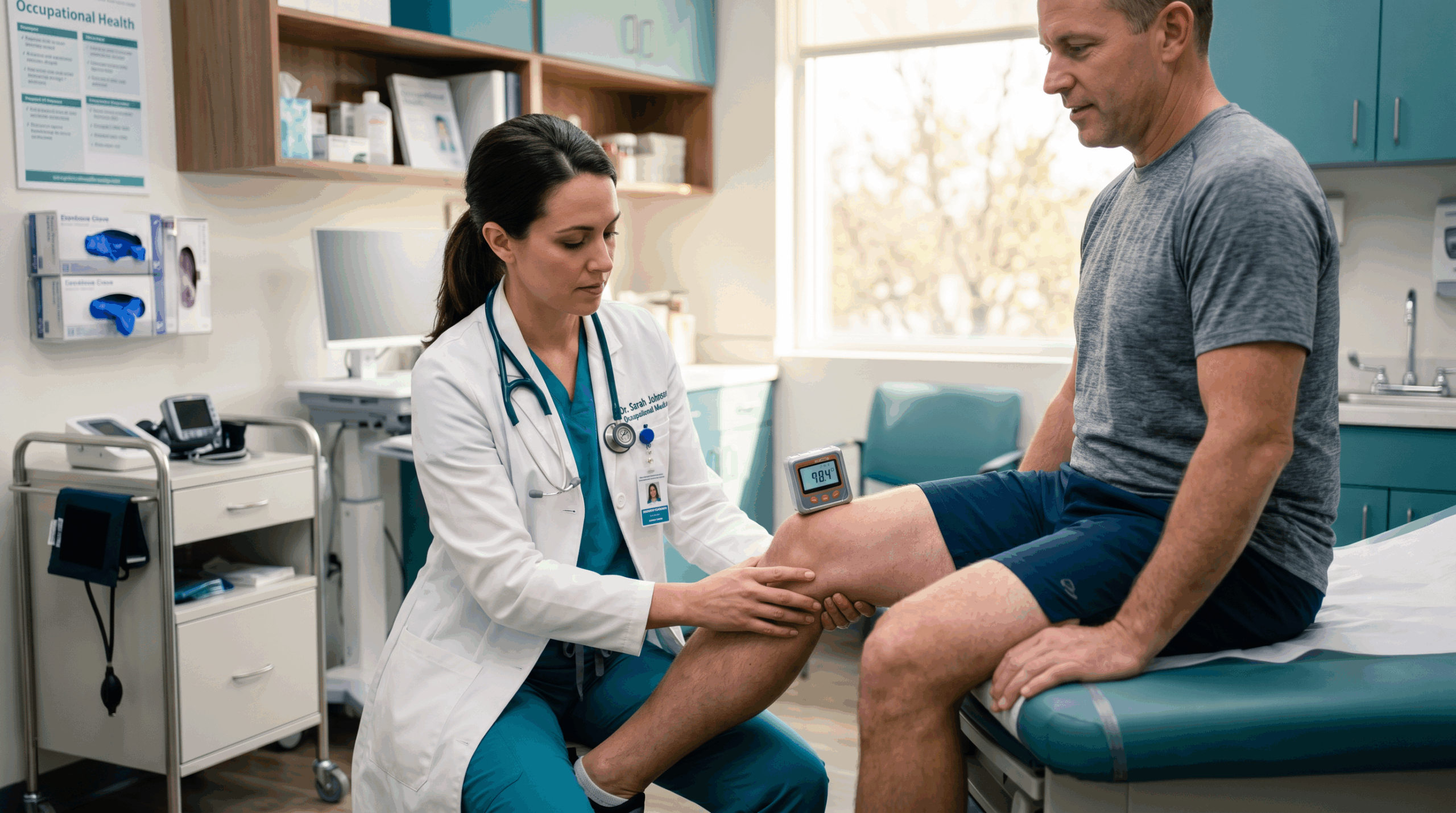
Calibrated digital instruments produce the kind of precise, repeatable data that impairment ratings require. Digital inclinometers measure spinal and joint range of motion with accuracy that handheld goniometers cannot match. Computerized dynamometers quantify grip and muscle strength in exact force values rather than graded estimates. Algometers measure pain pressure thresholds with a precision that removes the subjectivity of a verbal pain scale.
When these tools feed into a unified software platform, every measurement is timestamped, stored, and tied to the patient’s record automatically. The result is a defensible data trail that shows exactly what was measured, how, and when — with no handwriting to decipher and no transcription errors.
This matters for more than documentation. When an impairment rating is challenged, the ability to produce raw measurement data with calibration records and test-retest consistency is often what turns a disputed rating into a settled one.
Connecting Measurement Quality to Patient Outcomes
Precise measurement is not just a legal or administrative concern. It has real consequences for the patients and employers involved in the case.
An underestimated impairment rating can leave an injured worker with inadequate compensation, insufficient vocational support, or premature return to work in a role their body cannot sustain. An overestimated rating can push an employer toward unnecessary disability payments and keep a worker out of the workforce longer than necessary. Both outcomes represent a failure of the rating process — and both are more likely when the underlying measurements are imprecise.
When clinicians use objective, calibrated tools, the rating they produce reflects the patient’s actual functional status as closely as current science allows. That accuracy benefits everyone involved: the patient receives appropriate compensation and guidance, the employer pays a fair amount, and the clinician’s work withstands review.
What Defensible Impairment Documentation Looks Like
Regardless of the specific body part or injury, defensible impairment documentation shares a few common characteristics:
- Calibrated instruments with documented calibration records available on request
- Standardized protocols followed identically at every evaluation
- Multiple trial measurements to confirm consistency and rule out submaximal effort
- Raw numerical data preserved, not just the final impairment percentage
- Clear documentation tying measurements to the specific AMA Guides tables and figures used
- Validity indicators that demonstrate the patient gave consistent effort across trials
When all six are in place, the rating tells a complete story — one that is difficult to dispute and that accurately reflects the patient’s condition.
The Bottom Line for Occupational Medicine
Impairment ratings are high-stakes clinical decisions. They shape financial outcomes, return-to-work timelines, and legal dispositions for injured workers, and they put the credibility of the evaluating physician on the line every time.
The single most important thing a clinician can do to produce accurate, defensible ratings is to invest in objective measurement. Calibrated digital instruments, standardized protocols, and integrated software are not a luxury in this setting — they are the foundation that makes the rating credible in the first place.
When measurement precision is built into the process, impairment ratings stop being a source of dispute and become what they were always meant to be: an objective, fair reflection of a worker’s functional status after injury.
Categories & Tags
Disability Rating
Workplace Injury
Objective Measurement
Workers Compensation
Occupational Medicine
AMA Guides
Impairment Rating
Medical Legal
Functional Testing
Static Strength
Functional Capacity Evaluation (FCE)
OccMed
Pinch Testing
Goniometry
Grip Testing
Inclinometry
Range Of Motion
Northstar System
Muscle Testing