
CPT 97750 & 95851: What Objective Testing Codes Pay in 2026
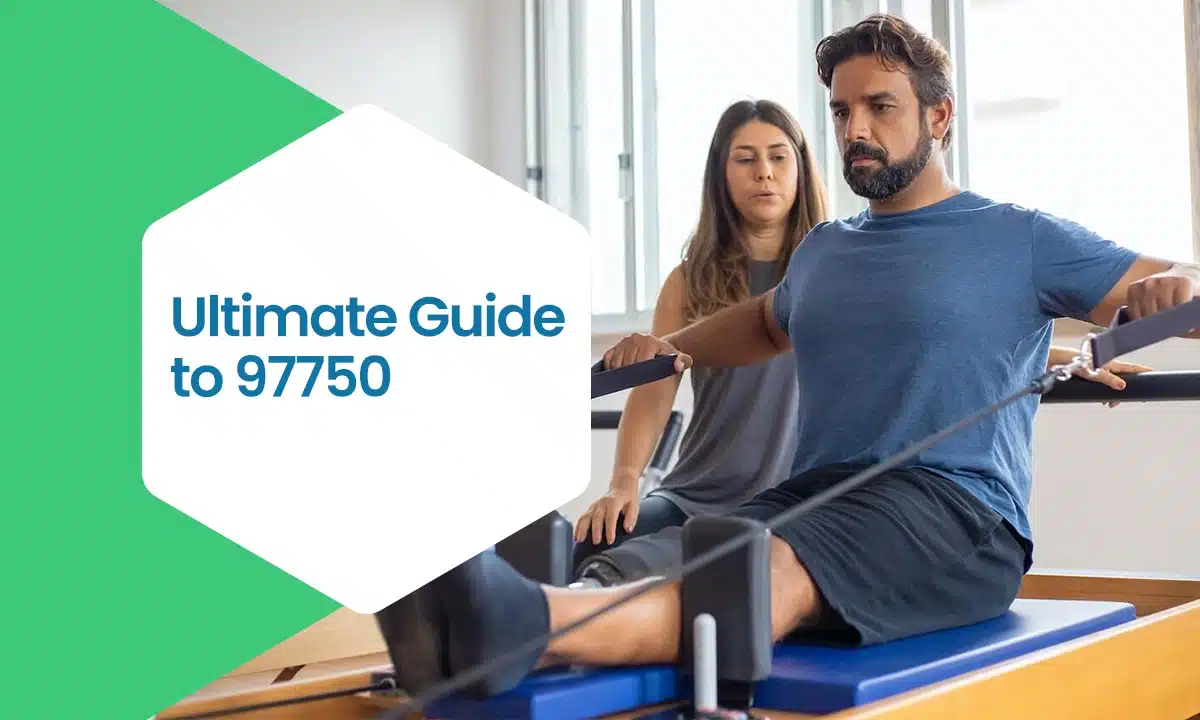
CPT 97750 and CPT 95851 are the two codes that decide whether your objective physical testing actually gets paid in 2026 — and whether the time you spend on range of motion, dynamometry, computerized strength testing, and functional performance batteries shows up as revenue or as a denial. Objective physical assessment is good medicine and good documentation, but it is only good revenue when the codes, the time, and the report all line up with what the payer expects. These tests can be separately reimbursed when they are billed under the right CPT codes with the right supporting documentation. They can also be denied, down coded, or recouped on audit when any of those pieces is missing.
This is a practical look at which CPT codes — starting with CPT 97750 and CPT 95851 — support the most common objective tests today, what documentation each code requires, and the bundling rules that decide whether two codes survive the same date of service.
Table of Contents
What Changed: Manual Muscle Testing Codes Are Gone
The first thing to know is what is no longer billable. CPT codes 95831, 95832, and 95833 — the manual muscle testing series — were deleted by the AMA effective January 1, 2020. KMC University’s coding bulletin documented the change at the time, and the codes have remained inactive since. Any practice still submitting 95831-95833 on claims is generating automatic denials and audit risk. Manual muscle testing is still clinically useful and still documentable inside an evaluation and management visit — it is just no longer a separately billable service in its own right.
The clean replacement for objective strength testing is dynamometry and computerized strength testing, billed under CPT 97750 when the test is comprehensive enough to meet the code definition. The instrument changes; the code changes; the documentation changes. Practices that ran muscle-testing reports under 95831 for years generally do better revenue and audit outcomes after moving to instrumented strength testing under 97750.
The Three Codes That Carry Most Objective Testing
For chiropractic, PT, occupational therapy, and occupational medicine practices that perform objective testing, three CPT codes carry most of the volume:
- CPT 97750 — Physical performance test or measurement, with written report, each 15 minutes. Time-based. Used for isokinetic strength testing, instrumented grip and pinch dynamometry, functional movement screens, FCEs, and impairment-rating performance batteries. Requires a separate written report
- CPT 95851 — Range of motion measurements and report (separate procedure); each extremity (excluding hand) or each trunk section (spine). Per-extremity or per-spinal-section. Requires that every joint of the extremity or trunk section be measured
- CPT 95852 — Range of motion measurements and report (separate procedure); hand, with or without comparison with normal side. Hand-specific ROM
The Cigna coverage policy on ROM testing states the rule plainly: 95851 and 95852 are designated as separate procedures and require both the practitioner’s interpretation of the results and a separate, distinct, dated, and signed written report. To bill 95851 for an extremity, every joint of that extremity must be tested. Shoulder-only ROM does not justify a 95851 for the upper extremity; it is documented inside the E/M visit instead.
What 97750 Requires (and What It Does Not Cover)
CPT 97750 is the most powerful and most misused of the three. Billed in 15-minute increments, it pays at a higher rate than therapeutic exercise codes precisely because it requires more: a defined test, quantitative results, a written report, and a clinical interpretation that ties the data to the plan of care. The CareCloud reimbursement summary for 97750 lays out the documentation elements: total direct time with the patient, objective measurements and functional accomplishments, a qualified provider, and a separate written report containing the measures performed, the data collected, and the impact on the plan of care.
What 97750 cannot be billed for is just as important. It cannot be used for routine documentation time, patient questionnaires, or progress-note writing. A January 2026 reminder from Gawenda Seminars and Consulting on LinkedIn put it bluntly: there is no CPT code for a progress report, and the time spent writing one cannot be billed under 97750. The minutes spent on subjective questioning and progress-note authoring roll into the timed treatment codes for the day. Practices that bill 97750 for re-assessment paperwork are setting themselves up for recoupment on audit.
The Same-Day Bundling Rules That Trip Up Most Claims
The single biggest source of objective-testing denials is the National Correct Coding Initiative procedure-to-procedure (PTP) edits. The APTA NCCI summary lists the relevant edits, and the takeaways for objective testing are concrete:
- The PT initial evaluation codes 97161, 97162, and 97163 are Column 1; 97750 is Column 2. The evaluation codes carry a 0 modifier indicator for 97161 and 97163, meaning 97750 cannot be billed on the same day as the initial evaluation under any circumstance
- 97750 and 95851/95852 are NCCI pairs as well. A Medicare Local Coverage Article from CGS for outpatient PT and OT explicitly states that ROM and physical performance test codes (95851, 95852, 97750, 97755) should not be billed on the same day as the initial evaluation
- Modifier -59 (or the more specific X-modifiers XE, XS, XP, XU) may unbundle some pairs when the services are genuinely distinct and separately documented, but only when the NCCI indicator is 1. Indicator 0 means no modifier can override the edit
The practical pattern that survives most audits: perform the initial evaluation on day one, schedule the comprehensive objective testing on a different date, and bill 97750 and any ROM codes on the testing-day claim with the appropriate therapy plan modifier (-GP for PT, -GO for OT, -GN for SLP). A separate written report is generated for the objective testing, signed and dated, and stored in the chart distinct from the daily note.
How Instrumented Testing Strengthens the Claim
The thread connecting every one of these codes is the requirement for an objective, separately documented result. A handwritten note that says “ROM grossly limited” does not support 95851. A grip-strength check that produces a single peak value with no trial structure does not support 97750. The codes were written for instrumented, repeatable, quantified testing — which is exactly what a digital inclinometer, a computerized dynamometer, and a configured testing software platform produce by default.
Tools like the JTECH Northstar Echo dual inclinometer generate a per-joint ROM report with trial-by-trial data, AMA-norm comparisons, and a validity column — the exact structure 95851 expects. The Tracker Freedom dynamometer system produces the timed, multi-trial strength data that supports 97750, complete with the coefficient-of-variation and rapid-exchange-grip outputs an FCE-grade report needs. Pairing instrumented testing with a clean billing workflow turns each test into both a clinical artifact and a defensible billing record.
A Clean Workflow That Stands Up to Audit
- Verify medical necessity and a physician order or therapy plan of care for the testing
- Schedule the objective testing on a date separate from the initial evaluation when possible
- Measure every joint required by the code descriptor for 95851 (the full extremity or trunk section) — partial measurements do not justify the code
- For 97750, document start and stop times of testing; each 15-minute unit must be supported by actual face-to-face testing time, not documentation time
- Generate the separate written report at the time of testing, signed and dated, including measurements, comparison to norms or contralateral side, and an interpretation tying the data to the plan of care
- Append the correct therapy modifier (-GP, -GO, -GN) and use -59 or an X-modifier only when the NCCI indicator allows and the services are genuinely distinct
- Retain the source data (the digital report from the instrument) in the chart along with the narrative report
Bottom Line
Objective testing pays when it is built on the right CPT codes with the right documentation. 97750 captures comprehensive physical performance testing in 15-minute units when a separate written report and quantified results back it up. 95851 and 95852 capture full-extremity, full-trunk-section, and hand ROM with a separate signed report. The deleted 95831 series is no longer in play. Same-day bundling rules push objective testing to a date separate from the initial evaluation. Build the workflow once around instrumented testing and a separate written report, and the same clinical work that improves patient outcomes also improves clean-claim rate and audit defense.
Image courtesy of https://medibillmd.com/blog/cpt-code-97750/