
Defensible Documentation: Why Objective Findings Hold Up When It Counts
Why Defensible Documentation Is the Backbone of Modern Practice
Every clinical encounter eventually leaves the exam room. Whether the next stop is an insurance audit, a peer review, a deposition, or a courtroom, the medical record is what speaks on the clinician’s behalf. When that record is built on objective, measurable findings, it speaks clearly. When it relies on subjective impressions and vague language, it leaves the door open to challenge.
For chiropractors, physical therapists, and occupational medicine providers, the difference between a documented case and a defensible case often comes down to the quality of the underlying data. This is the heart of objective documentation: capturing measurable, repeatable findings that hold up under scrutiny long after the patient has left the office.
What Reviewers Actually Look For
When clinical documentation is scrutinized by an insurance carrier, an independent medical examiner, or an attorney, the questions go beyond what was written in the SOAP note. Reviewers want to know what was measured, how it was measured, when, by whom, and whether the methodology was consistent across visits.
Records that survive that scrutiny share a few common traits. Findings are quantified rather than described. Measurements use named, standardized protocols. Equipment used to capture data is identified, and calibration status is implied or documented. Progress is shown through repeated measurements over time, not narrative summaries. Conclusions in the assessment section trace cleanly back to the data in the objective section.
Records that fall apart under review tend to share the opposite traits. Findings are described as “improved,” “limited,” or “tender to palpation” without a number attached. Range of motion is recorded as “decreased” rather than as a measured angle. Strength is graded by feel rather than measured in pounds or Newtons. The story may be coherent, but the evidence is thin.
Subjective Versus Objective: A Practical Distinction
Subjective findings come from the patient: pain levels, symptom history, and self-reported limitations. They matter, and courts have repeatedly affirmed that disability and injury cannot be denied based purely on a lack of objective evidence. But subjective findings alone are rarely enough to drive billing, treatment authorization, or legal outcomes.
Objective findings are the measurable, observable, repeatable data the clinician captures. Range of motion in degrees. Grip strength in pounds. Manual muscle testing values, pain pressure thresholds, and inclinometer readings. These are the data points that reviewers, insurers, and attorneys can compare across providers and across visits.
The strongest records combine both. The patient’s reported pain level corroborates a measured loss of cervical extension. A complaint of weakness lines up with a quantified strength deficit. A reported difficulty with daily activities aligns with the results of a functional capacity evaluation. When subjective reports and objective measurements tell the same story, the documentation becomes far harder to dispute.
Where Documentation Most Often Falls Short
Even experienced clinicians produce records that look complete but do not hold up well to outside review. The most common gaps fall into a few predictable patterns:
- Range of motion described, not measured. Notes that say “limited cervical rotation” without a specific angle leave the reader guessing.
- Strength findings graded by feel. A 4 out of 5 manual muscle test means different things to different examiners. A measured value in pounds or Newtons does not.
- No documentation of effort or consistency. Without coefficient of variation or repeat trials, an insurance reviewer can argue the patient was submaximal.
- Progress noted in narrative form only. “Patient is doing better” is not a clinical finding. A side-by-side comparison of measurements taken three weeks apart is.
- Equipment not identified. If the record does not say what tool was used, a reviewer cannot evaluate whether the data is reliable.
- Inconsistent methodology across visits. When the same patient is tested with different positions, different devices, or different examiners, comparing readings becomes unreliable.
None of these gaps reflect poor clinical care. They reflect documentation habits that worked in a less scrutinized era and now leave clinicians exposed.
How Objective Tools Strengthen the Record
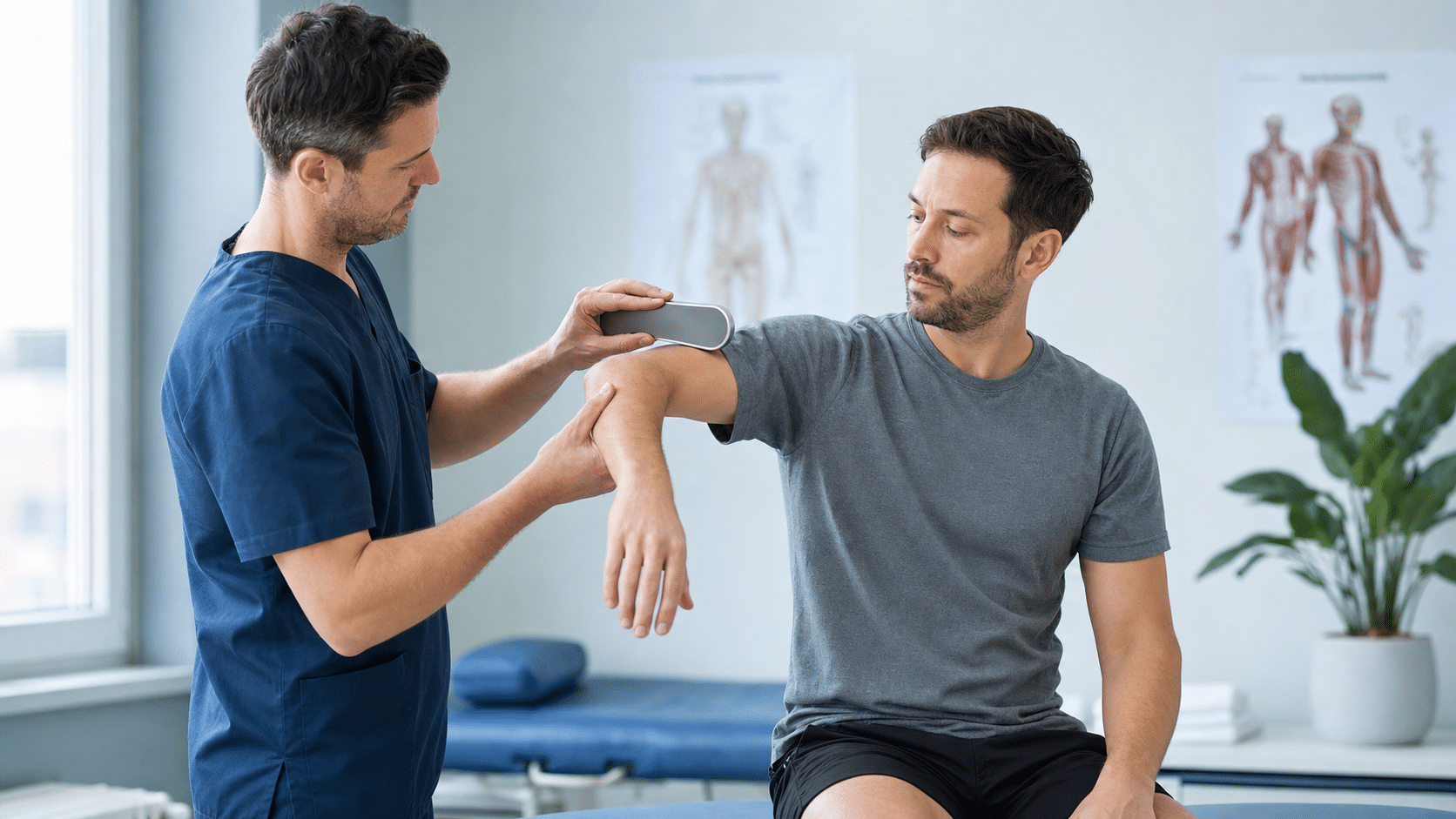
Calibrated digital instruments turn subjective impressions into structured data. A digital inclinometer captures spinal range of motion in single-degree increments. A handheld dynamometer measures strength in precise force values rather than estimated grades. An algometer quantifies pain pressure thresholds. A grip dynamometer with a five-rung adjustable handle records every trial and the variation between them.
What makes these tools defensible is not just the precision. It is the structure they impose on the documentation process. Each measurement is timestamped and stored automatically. Each test follows a named protocol. Each report references the specific device and the conditions under which it was used. When the same patient returns six weeks later, the testing process can be replicated exactly, and the comparison is meaningful.
For an attorney building a case or an insurer evaluating a claim, this kind of structured data trail is far more persuasive than a paragraph of clinical impressions. It is the difference between telling a reviewer what happened and showing them.
Connecting Documentation to Patient Care
Defensible documentation is sometimes framed as a legal or billing concern, but the same practices that produce defensible records also produce better clinical decisions. When a clinician can compare today’s grip strength to the baseline measured eight weeks ago, treatment plans get adjusted with confidence rather than guesswork. When range of motion is tracked in single-degree increments, small but meaningful gains become visible. When effort and consistency are quantified, the clinician can spot symptom magnification or unintentional submaximal effort early.
This data also creates better conversations with patients. Showing a patient a chart of their own measurable progress is a far more effective motivator than a verbal “you’re getting better.” It also gives them the language and the evidence to advocate for themselves with employers, insurers, and other providers.
What Defensible Documentation Looks Like in Practice
Across body parts, conditions, and specialties, defensible documentation tends to share the same characteristics:
- Quantified measurements with units of measurement and the device used clearly identified
- Standardized protocols followed identically every visit, including patient position and warm-up
- Repeat trials with consistency metrics like coefficient of variation to validate effort
- Bilateral comparisons documented for any unilateral injury or impairment
- Trend tracking across multiple visits, not just isolated readings
- Clean linkage between measured findings, the assessment, and the treatment plan
- Calibration records for instruments, available on request
None of these practices require expensive infrastructure. They require a deliberate choice to make objective measurement the default rather than the exception.
The Bottom Line for Clinicians
Documentation does more than fulfill billing requirements or check a compliance box. It is the lasting record of clinical reasoning, patient progress, and professional judgment. When that record is built on objective, calibrated measurement, it speaks for the clinician long after the visit is over.
For practices that handle personal injury, workers’ compensation, or any case that may face outside review, the investment in objective measurement tools and standardized protocols pays back many times over. It produces better clinical care, smoother reimbursement, and records that hold up when it matters most. In a clinical environment that grows more scrutinized every year, defensible documentation is no longer optional. It is the foundation that everything else rests on.
Practices that handle personal injury claims and workers’ compensation cases benefit most from defensible documentation, because the legal exposure is real and the financial stakes are high. The Centers for Medicare and Medicaid Services publishes documentation standards every clinician should review. Pairing those federal expectations with strong internal protocols transforms defensible documentation from a compliance task into a strategic asset. To see how JTECH systems support defensible documentation across every patient encounter, visit our Functional Assessment Systems page.
For chiropractors and physical therapists who already invest in objective measurement, defensible documentation is the natural extension of that data. Every range-of-motion reading, every grip score, and every isometric strength value belongs in the chart with its date, device, and protocol so the record can stand on its own. Built that way, defensible documentation moves beyond legal protection and becomes a daily clinical tool that supports better treatment decisions, faster reimbursement, and clearer patient communication.