
You Can’t See the Whole Patient Picture Without a Functional Assessment
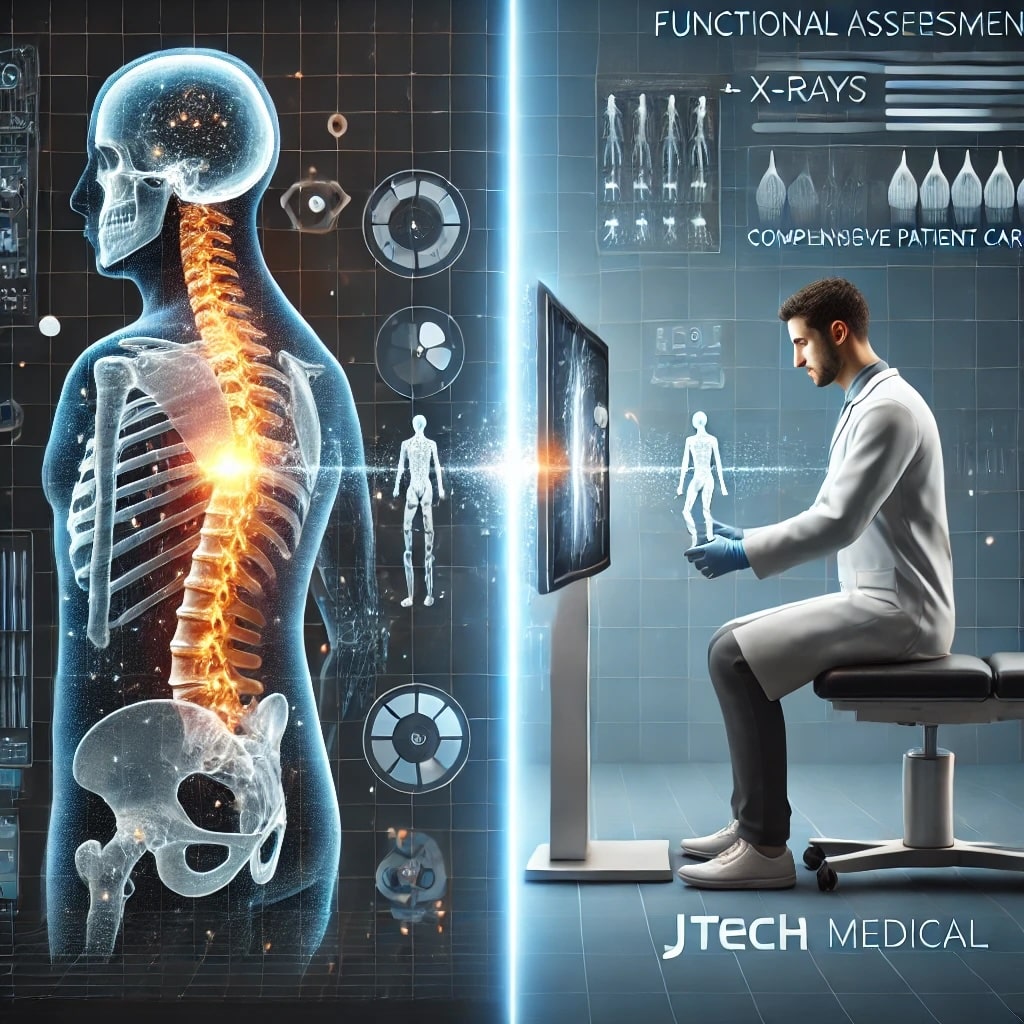
Chiropractic care excels at visually assessing patients—observing posture, palpating the spine, and analyzing spinal alignment. X-rays often supplement this by offering clear insight into skeletal structure, revealing misalignments or structural abnormalities. These tools are invaluable.
But here’s the catch: without a functional assessment, chiropractors only see part of the story. Structural findings alone may mask how the body actually moves, functions, or compensates in daily life. That’s where functional assessments step in—and they’re crucial for delivering high-quality care.
A functional assessment evaluates not just structure—but how the body performs tasks: mobility, strength, balance, gait, range of motion, and movement patterns. Chiropractors may use tools like gait analysis, Functional Movement Screen (FMS), or validated patient-reported outcome questionnaires such as:
- Oswestry Disability Index (ODI)
What Is a Functional Assessment (and Why It Matters)
- Neck Disability Index (NDI)
- Roland-Morris Questionnaire (RMQ)
These assessments uncover limitations or dysfunctions that structural imaging alone—like X-rays—will often miss.
The Quality-of-Care Argument
In modern healthcare, quality of care demands more than pinpointing structural issues—it requires understanding functional impact and outcomes.
A standardized functional outcome assessment is considered a high-priority quality measure across specialties—including chiropractic medicine—within systems like the U.S. Medicare MIPS program. It requires documentation of both the assessment using validated tools and a follow-up care plan based on identified deficiencies.
This ensures:
- Accurate baseline tracking
- Personalized treatment plans
- Objective monitoring of patient progress
- Stronger clinical documentation
- Better communication between patient, clinician, and third-party payers
Without functional assessments, providers may miss critical deficits—compromising both effectiveness and quality standards.
Evidence That Functional Assessment Complements Structural Evaluation
Research confirms that functional assessments are far more than a formality—they’re central to treatment planning and effectiveness:
- A review titled Use of Functional Assessment to Define Therapeutic Goals emphasizes that functional metrics both predict intervention effectiveness and serve as important outcomes themselves⁵.
- Studies exploring outcome measures in chiropractic care highlight the role of standardized, patient-oriented tools in reliably documenting baseline status and response to treatment⁶.
These findings support the view that functional data is essential for understanding patient needs, guiding treatment, and validating outcomes—not just as an add-on, but as a core component of care.
When You Rely Solely on Structure…
Even the most skilled visual exam or X-ray can omit the bigger picture:
- A patient might have seemingly minor structural deviations but significant movement dysfunction impacting daily function.
- Conversely, structural issues may appear concerning yet the patient remains functionally stable or well-compensated.
- Without functional testing, there’s risk of over- or under-treating and missing root causes of pain or impairment.
In Summary
- Structural tools (visual exam, X-rays) reveal what is wrong anatomically.
- Functional assessment reveals how the body performs—highlighting real-world implications.
Together, they offer the whole patient picture—a blend of structure and function. This integrated view is essential for delivering high-quality, patient-centered, and outcome-driven chiropractic care.
“You can’t see the whole patient picture without a functional assessment.”
References
Take Action
Don’t leave gaps in your patient care. Contact JTECH Medical today for the industry standard in functional assessment tools—including range of motion, muscle strength, grip strength, and algometry. Save time with Northstar’s automated narrative reports and create comprehensive, print-ready reports in seconds.
👉 Call (385) 695-5018 today or visit jtechmedical.com to see how Northstar can help you deliver the whole patient picture.