
Get a Grip! What Does My Grip Strength Reveal About My Health?

Your grip strength health indicator is one of the most powerful predictors of overall health, longevity, and recovery. As a non-invasive grip strength health indicator, a calibrated dynamometer test reveals more about cardiovascular fitness, neuromuscular function, and rehab progress than most patients realize. With Commander Echo, providers turn this grip strength health indicator into defensible, repeatable data. Explore JTech Medical solutions aligned with American Heart Association and National Institutes of Health research that validates the grip strength health indicator as a vital sign of overall wellness.
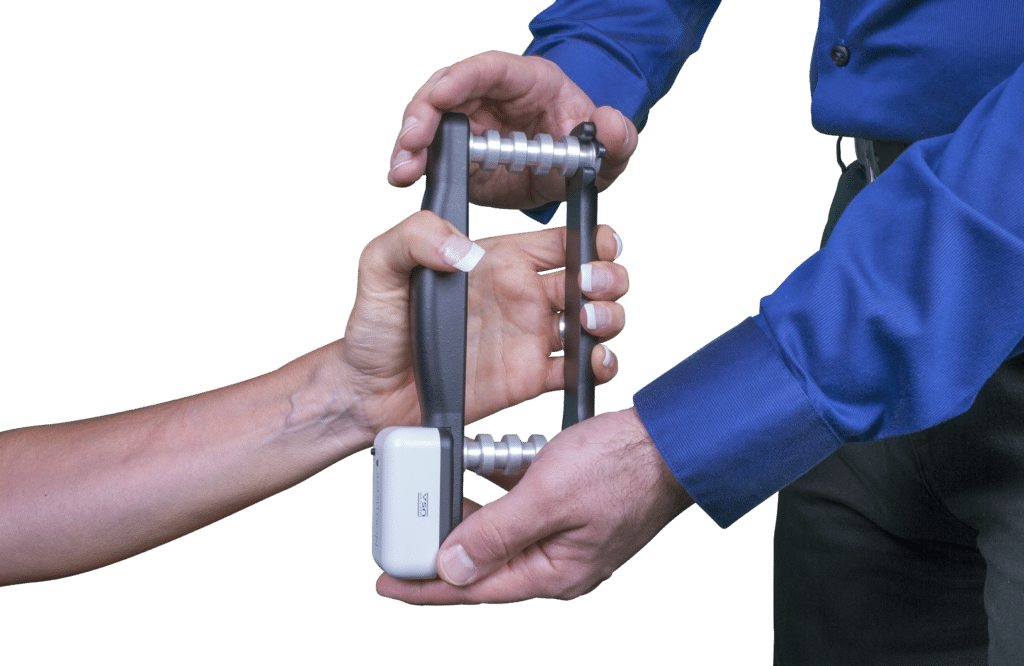
While you might think that your grip strength is only good for a firm handshake, the strength of your hands can actually be a powerful predictive indicator of your overall health. As such, many chiropractors, physical therapists, and physicians use functional assessment equipment designed to test grip strength alongside other objective strength measurements.
So what does your grip strength say about your overall health? Below are some of the primary insights doctors, chiropractors, and rehab specialists can glean from a simple grip test—and how you can use that information to take action.
What Is the Grip Strength Health Indicator and How Is It Measured?
Before we dive into why grip strength matters, it helps to understand exactly what it is and how clinicians measure it.
Grip strength is essentially synonymous with hand strength—it’s a measure of the muscular health of your hands and forearms. Grip strength is typically measured in pounds, kilograms, or Newtons by squeezing a piece of muscle strength testing equipment known as a dynamometer, usually three times in each hand to capture an accurate average.
The average healthy grip strength for men is roughly 72.6 pounds, while women typically measure around 44 pounds. Should your score fall well below these benchmarks, it could be an early indicator of a variety of health issues. Keep in mind that grip strength naturally decreases with age and isn’t a measure of pain tolerance.
5 Things Your Grip Strength Reveals About Your Health
1. Physical Therapy and Rehab Progress
Grip strength is one of the most reliable benchmarks for tracking how physical therapy is going for an injured patient. Because sensitive evaluation tools can detect even the slightest changes in grip strength, clinicians use it to monitor progress week over week. A stronger grip implies a patient is benefiting from therapy, while a weakening or stalled grip suggests the treatment plan may need to change.
2. Cardiovascular Health
Your grip strength can also signal the health of your heart. According to Harvard Medical School, a decrease in grip strength of about 11 pounds is linked to a 17% increased risk for heart disease and dying from it, plus a 7% increased risk for heart attack.
Even after researchers adjusted a study of more than 140,000 adults for external factors such as smoking and age, grip strength remained a stronger predictor of cardiovascular disease than blood pressure. Grip strength can also indicate stroke risk and serves as a reliable measure of biological age—not just chronological age.
3. Functional Capacity and Daily Living
Strong grip strength is closely tied to your ability to perform everyday activities—opening jars, carrying groceries, gardening, and lifting children or grandchildren. Functional Capacity Evaluations (FCEs) frequently include grip strength testing to determine whether a patient is ready to return to work or normal activity.
4. Bone Density and Fall Risk
Research has linked low grip strength with reduced bone mineral density and increased fall risk in older adults. Because grip is a quick, inexpensive proxy for total-body muscular health, it’s a valuable screening tool for clinicians who want to flag patients for further evaluation.
Biological Age and Longevity: The Grip Strength Health Indicator
Studies repeatedly show that adults with higher grip strength tend to live longer, healthier lives. That’s why grip strength is increasingly considered a vital sign of healthy aging—right alongside blood pressure and resting heart rate.
How Can I Improve My Grip Strength?
The good news is that grip strength is highly trainable at almost any age. You can improve your grip strength by adding a variety of hand and forearm exercises to your routine, including:
- Farmer’s carries, deadlifts, and other weight-bearing lifts
- Dead hangs from a pull-up bar
- Hand grippers, stress balls, or putty
- Everyday activities like gardening, shoveling, or carrying groceries
- Targeted physical therapy exercises prescribed by a clinician
Talk to your doctor or therapist as well—they have access to a variety of rehab tools and protocols that can help you improve overall strength and function. Because grip strength tends to rise as your overall fitness improves, even modest activity helps. Just 10 minutes of exercise per day can boost mobility, reduce disability risk, and add years to your life.
Take Your Health Into Your Own (Strong) Hands
Your grip strength and range of motion are valuable indicators of your overall health and well-being. Working with a clinician who uses objective functional assessment tools and a full range of physical therapy equipment ensures you have the data needed to take real action.
Ready to upgrade your evaluation toolkit? Contact JTECH Medical today for more information on grip strength testing equipment and a complete lineup of physical therapy and functional assessment solutions.