
Impairment Rating Guide: Accurate, Defensible Measurements
Key Takeaways:
- An impairment rating is only as defensible as the measurement data behind it.
- The AMA Guides require objective, reproducible ROM and strength measurements — not visual estimates.
- Calibrated digital inclinometers and dynamometers with effort-testing analysis are the modern standard.
- Standardized workflows reduce disputes, speed claim resolution, and protect provider credibility.
In occupational medicine, few clinical tasks carry higher stakes than assigning a permanent impairment rating. That number influences workers’ compensation benefits, settlement values, return-to-work eligibility, and legal outcomes — often for years after an injury. Yet the precision and defensibility of an impairment rating depends almost entirely on the quality of the underlying measurements. Accurate impairment ratings are not simply about clinical expertise; they require the right tools, the right protocols, and reproducible data that holds up under scrutiny.
Why Impairment Ratings Matter in Occupational Medicine
More than 40 states require physicians to follow the AMA Guides to the Evaluation of Permanent Impairment when assigning ratings for workers’ compensation purposes. These guidelines translate objective clinical findings — range of motion, strength testing, sensory deficits, and functional capacity — into standardized whole-person impairment (WPI) percentages.
The goal is consistency: two evaluating physicians examining the same patient under the same conditions should arrive at the same impairment rating. When they don’t, it creates disputes, delays benefits, and exposes clinicians to legal challenges. Accurate impairment ratings protect patients, providers, and the integrity of the compensation system.
- A 1% difference in WPI can represent thousands of dollars in compensation
- Ratings that lack reproducible data are routinely challenged in hearings
- Poorly documented assessments drive up administrative and legal costs
- Inconsistent measurement methods erode provider credibility with insurers and attorneys
The AMA Guides and the Role of Objective Measurement in Impairment Rating
The AMA Guides 6th Edition shifted the framework from diagnosis-based impairment toward a more functional, objective approach. For musculoskeletal impairments — the most common category in occupational medicine — the Guides require clinicians to measure range of motion using standardized inclinometry and assess strength using accepted dynamometric protocols.
Subjective pain reports and patient self-assessments are not sufficient on their own. The evaluating physician must document specific, quantifiable values and compare them against published normative data to assign an impairment class and grade modifier. This requirement places enormous weight on measurement precision. If the underlying data is imprecise, inconsistent, or poorly documented, the impairment rating can be challenged — and often is.
The AMA Guides specifically endorse the use of dual inclinometers for spinal ROM measurement and calibrated hand dynamometers for grip and pinch strength. Devices that lack calibration verification or that produce non-reproducible results are fundamentally unsuited for impairment work.
Why Measurement Precision Is the Weakest Link in Many Practices
In many occupational medicine and chiropractic practices, measurement tools have not kept pace with documentation requirements. Goniometers, tape measures, and visual estimates introduce clinician-dependent error. Manual muscle testing grades (0–5 scale) are inherently subjective and poorly reproducible across examiners.
Research published in physical medicine literature consistently shows that inter-rater reliability for manual ROM measurement can be as low as 0.4 on intraclass correlation coefficient (ICC) scales — well below the 0.75 threshold typically required for clinical acceptability. When impairment ratings are contested, attorneys and administrative judges scrutinize measurement methodology. A provider who cannot demonstrate that their measurement tools are calibrated, standardized, and validated is in a difficult position.
Common measurement gaps that undermine impairment ratings include:
- Using uncalibrated or consumer-grade goniometers for spinal ROM
- Relying on visual estimation for shoulder or hip motion
- Performing grip strength tests without calibrated digital dynamometers
- Failing to perform multiple trials and apply coefficient of variation analysis
- Documentation that does not specify the measurement device or protocol used
Digital Tools That Produce Defensible Impairment Rating Data
JTECH Medical’s measurement systems were specifically designed to address these documentation gaps and support accurate impairment ratings.
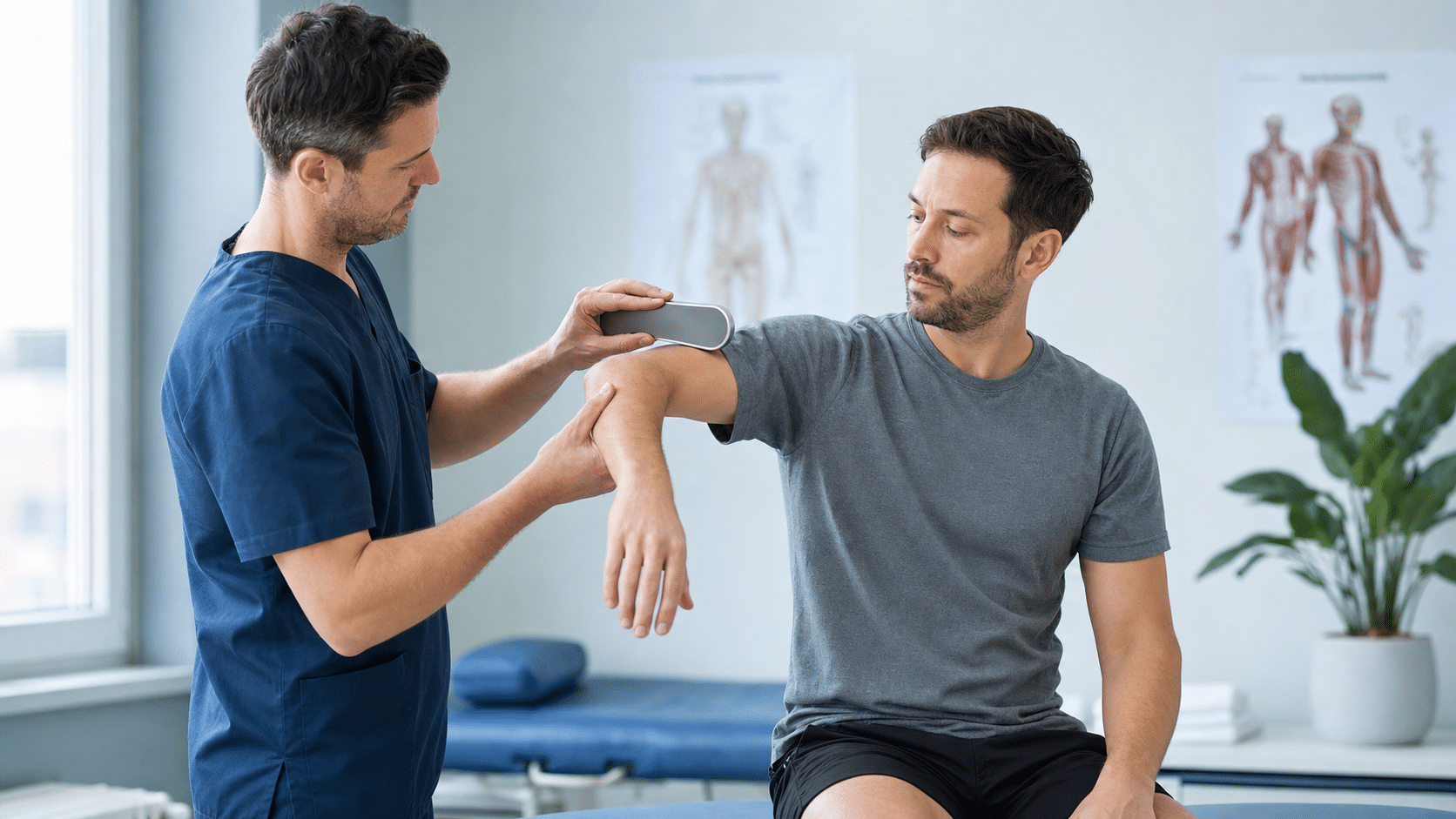
Digital Inclinometers for ROM
The dual-inclinometer protocol built into the Northstar software platform guides clinicians through AMA-compliant ROM measurement, prompting for the correct number of trials, calculating averages automatically, and flagging results that fall outside normal variability parameters. Learn more about JTECH digital inclinometers.
Computerized Dynamometers for Strength Testing
For strength testing, JTECH’s digital dynamometers capture force curves in real time, enabling coefficient of variation (CV) analysis to assess sincerity of effort — a critical factor in impairment evaluations where maximum effort must be demonstrated. Reports generate automatically in narrative form, citing the measurement protocol, normative comparisons, and impairment classification.
This level of documentation does more than satisfy administrative requirements. It positions the clinician as a credible, methodical expert whose findings will be difficult to challenge. In workers’ compensation and personal injury contexts, that credibility has direct value — both for the patient’s case and the provider’s professional reputation.
Effort Testing and Sincerity of Effort in Impairment Rating
One dimension of accurate impairment ratings that is frequently mishandled is effort verification. The AMA Guides require that maximal voluntary effort be demonstrated before ROM or strength measurements are accepted for rating purposes. Without objective effort analysis, an impairment rating based on submaximal performance will overstate impairment — and may be overturned.
Digital dynamometers and inclinometry systems with built-in effort analysis tools enable clinicians to calculate CV across multiple trials, generate bell-curve grip profiles, and document findings in a format that satisfies both the AMA Guides and legal standards of evidence. Practices that rely on subjective observation alone to assess effort are vulnerable to challenge from defense physicians who apply these more rigorous standards.
Integrating Impairment Rating Into Your Practice Workflow
Achieving consistently accurate impairment ratings requires more than purchasing the right equipment. It requires a standardized workflow that every examiner follows on every assessment. Key elements include:
- Using the same calibrated devices for every patient, with routine calibration verification
- Following AMA-specified measurement protocols for the body region being evaluated
- Collecting the required number of trials and computing averages per the Guides
- Documenting measurement methodology, not just results, in every report
- Comparing findings against age- and sex-stratified normative databases
Practices that build these protocols into their workflow using integrated systems like Northstar consistently produce reports that satisfy insurer audits, withstand legal challenge, and result in timely benefit resolution for patients. For clinicians who perform impairment ratings regularly, the investment in standardized measurement infrastructure pays dividends in time saved, disputes avoided, and professional credibility maintained.
The Bottom Line on Impairment Rating Accuracy
An impairment rating is only as defensible as the data behind it. In a system where ratings determine financial outcomes for injured workers and create legal exposure for providers, measurement precision is not optional — it is the foundation of the entire evaluation. Practices that rely on subjective estimates and manual measurement methods are operating with tools designed for a different era of clinical documentation.
Objective, calibrated measurement systems that produce reproducible, AMA-compliant data are the standard that insurers, attorneys, and administrative bodies increasingly expect. Providers who meet that standard deliver better outcomes for patients and build practices that are sustainable in an occupational medicine environment where scrutiny is the norm.
Frequently Asked Questions About Impairment Ratings
What is an impairment rating?
An impairment rating is a standardized percentage that quantifies the degree of permanent functional loss following an injury or medical condition. It is most often expressed as whole-person impairment (WPI) and is used to determine workers’ compensation benefits, settlement values, and return-to-work decisions.
What are the AMA Guides to the Evaluation of Permanent Impairment?
The AMA Guides are the most widely adopted methodology in the United States for assigning impairment ratings. They specify objective measurement protocols — including dual-inclinometer ROM testing and calibrated dynamometric strength testing — and require documented, reproducible data.
How is sincerity of effort measured during an impairment evaluation?
Sincerity of effort is assessed using objective metrics such as coefficient of variation (CV) across multiple trials and bell-curve grip strength profiles produced by computerized dynamometers. Subjective observation alone is not considered defensible under AMA Guides standards.
What tools improve impairment rating accuracy?
Calibrated digital inclinometers, computerized hand dynamometers, and integrated reporting platforms such as JTECH’s Northstar produce the reproducible, AMA-compliant data needed for defensible impairment ratings.
Build Defensible Impairment Ratings with JTECH
Ready to upgrade your impairment rating workflow with calibrated, AMA-compliant measurement tools? Contact JTECH Medical for a demo of Northstar and our digital measurement systems.