
Medical Device Integration Could Change Healthcare
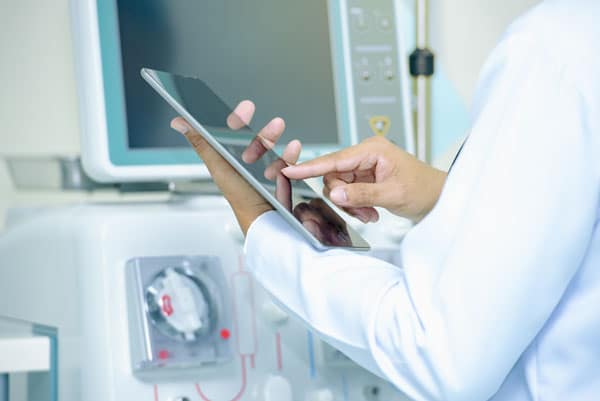
Quick answer: Medical device integration (MDI) is the process of connecting clinical devices, such as monitors, dynamometers, imaging equipment, and wearables, to electronic medical record (EMR) systems and other healthcare software so data flows automatically and securely. It improves workflow, reduces transcription errors, supports better diagnostics, and is a foundational step toward true healthcare interoperability.
As healthcare technology advances, integrating EMRs with medical devices has become one of the most important conversations in the industry. New research shows that the data captured by medical devices, when bridged across providers and systems, could be transformative for patient care. The most common barrier to adoption? Simply not having a plan.
What Is Medical Device Integration?
Medical device integration refers to the secure, two-way exchange of clinical data between medical devices and healthcare information systems. Instead of clinicians manually entering vital signs, ROM measurements, or strength testing data into the chart, integrated devices push that data directly into the EMR in real time. This eliminates transcription errors, saves clinician time, and creates a richer, more accurate longitudinal patient record.
Why Medical Device Integration Matters in Healthcare
According to a Frost & Sullivan analysis, more than 50 percent of care providers do not have a plan for technology integration, even though the benefits to workflow, diagnostics, monitoring, and prevention are immediate and long-term.
As Frost & Sullivan Healthcare Research Analyst Shruthi Parakkal noted: “More than 50 percent of healthcare providers do not have a healthcare IT roadmap, although they acknowledge the role of digital health in enhancing healthcare efficiency. Consequently, even the existing interoperability standards such as HL7, DICOM, and Direct Project are not being utilized optimally by many providers.”
Key Benefits of Medical Device Integration
- Improved workflow: Clinicians spend less time on manual data entry and more time with patients.
- Fewer transcription errors: Data flows directly from device to EMR, eliminating typos and missed entries.
- Better diagnostics: Aggregated, high-quality data supports more accurate clinical decisions.
- Continuous monitoring: Remote and bedside devices feed real-time data for earlier intervention.
- Stronger documentation: Defensible reports for workers’ comp, personal injury, and value-based care.
- Operational efficiency: Streamlined data exchange across departments and locations.
Common Standards Used in Medical Device Integration
- HL7 (Health Level Seven): The most widely used standard for exchanging clinical and administrative data between healthcare applications.
- FHIR (Fast Healthcare Interoperability Resources): A modern HL7 standard built on web technologies for easier, API-based integration.
- DICOM: The standard for storing and transmitting medical imaging data.
- Direct Project: A secure messaging standard for exchanging health information.
- IEEE 11073: A family of standards for personal health and point-of-care device communication.
Barriers to Medical Device Integration
Despite clear benefits, adoption is uneven. The biggest obstacles cited by providers include:
- No IT roadmap: Over half of providers lack a written integration plan.
- Proprietary device protocols: Vendor lock-in makes interoperability harder.
- Legacy equipment: Older devices often cannot speak to modern EMRs without middleware.
- Security and compliance concerns: HIPAA, cybersecurity, and FDA requirements add complexity.
- Budget and staffing: Integration requires upfront investment in IT and training.
The FDA is also expected to add momentum to interoperable device development, accelerating the move toward connected, standards-based systems.
Frequently Asked Questions
What does medical device integration mean?
Medical device integration is the secure connection of clinical devices to EMRs and other healthcare systems so device data flows automatically into the patient record without manual entry.
What are the main standards for medical device integration?
The most common standards are HL7, FHIR, DICOM, Direct Project, and IEEE 11073. HL7 and FHIR handle clinical data; DICOM handles imaging; and IEEE 11073 covers point-of-care device communication.
Why don’t more providers integrate their medical devices?
Per Frost & Sullivan, more than 50 percent of providers simply lack a healthcare IT roadmap. Other barriers include proprietary protocols, legacy equipment, security concerns, and budget limits.
How does medical device integration improve patient care?
It reduces transcription errors, gives clinicians real-time data, supports faster diagnosis and earlier intervention, and produces richer documentation for ongoing care and outcome tracking.
Is medical device integration secure?
Yes, when implemented to HIPAA, FDA cybersecurity, and modern interoperability standards. Encryption, authentication, and audit logging are built into compliant integration platforms.
Build a Connected Practice with JTECH Medical
JTECH Medical’s functional assessment devices and the Northstar and Tracker software platforms are designed for a connected practice. They capture objective data wirelessly from inclinometers, dynamometers, grip and pinch gauges, and other devices, then feed it into clean, defensible reports ready for documentation and downstream integration.
Are you working toward a more integrated healthcare environment? Get in touch with JTECH Medical to see how our functional testing tools can fit into your medical device integration roadmap.